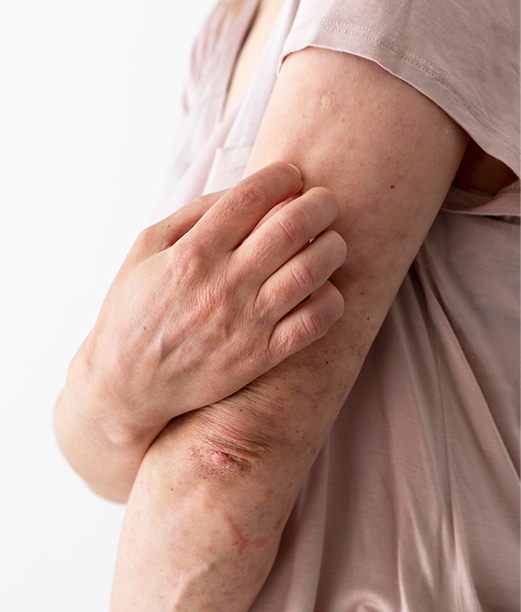
Atropic Dermatitis (Vicharchika)
Atopic dermatitis is a long-lasting skin condition characterized by dryness, itching, redness, and irritation. It often flares up, with the rash sometimes becoming inflamed and oozing clear fluid. In severe cases, the skin can crack and bleed. In Ayurveda, this condition is known as Vicharchika, which falls under the category of Kushta Rogas (skin diseases). The main dosha involved in atopic dermatitis is Kapha, and Ayurveda offers effective treatments to achieve a complete cure by addressing the underlying imbalances.
Psoriasis (kithibha)
In Ayurveda, Psoriasis is referred to as Kithibha, an autoimmune condition that leads to the formation of thick, red, dry patches of skin that can be itchy or painful. It can affect any area of the body. Psoriasis is believed to arise from an imbalance in the Vata and Kapha doshas, which disrupt the body’s natural balance and trigger the skin’s inflammatory response.
Pigmentation (vyanga)
The skin’s color is determined by a substance called melanin, which is produced by skin cells. When these cells are damaged or unhealthy, they may produce excess melanin, leading to darkened areas on the skin. In Ayurveda, this condition is known as Vyanga, classified as one of the Kshudraroga (minor diseases). Vyanga is marked by Niruja (painless) and Shavavarna Mandalas (bluish-black patches) on the face, and it is a common issue related to facial skin. Clinically, it resembles facial melanosis, a type of hyperpigmentation disorder. Ayurvedic treatments for Vyanga focus on using herbs with Rakta Prasadaka (blood-purifying), Twak Prasadaka (skin-nourishing), and Varnyakara (color-enhancing) properties. These help balance the doshas, support blood purification (Raktashodhana), and promote healthier skin.